


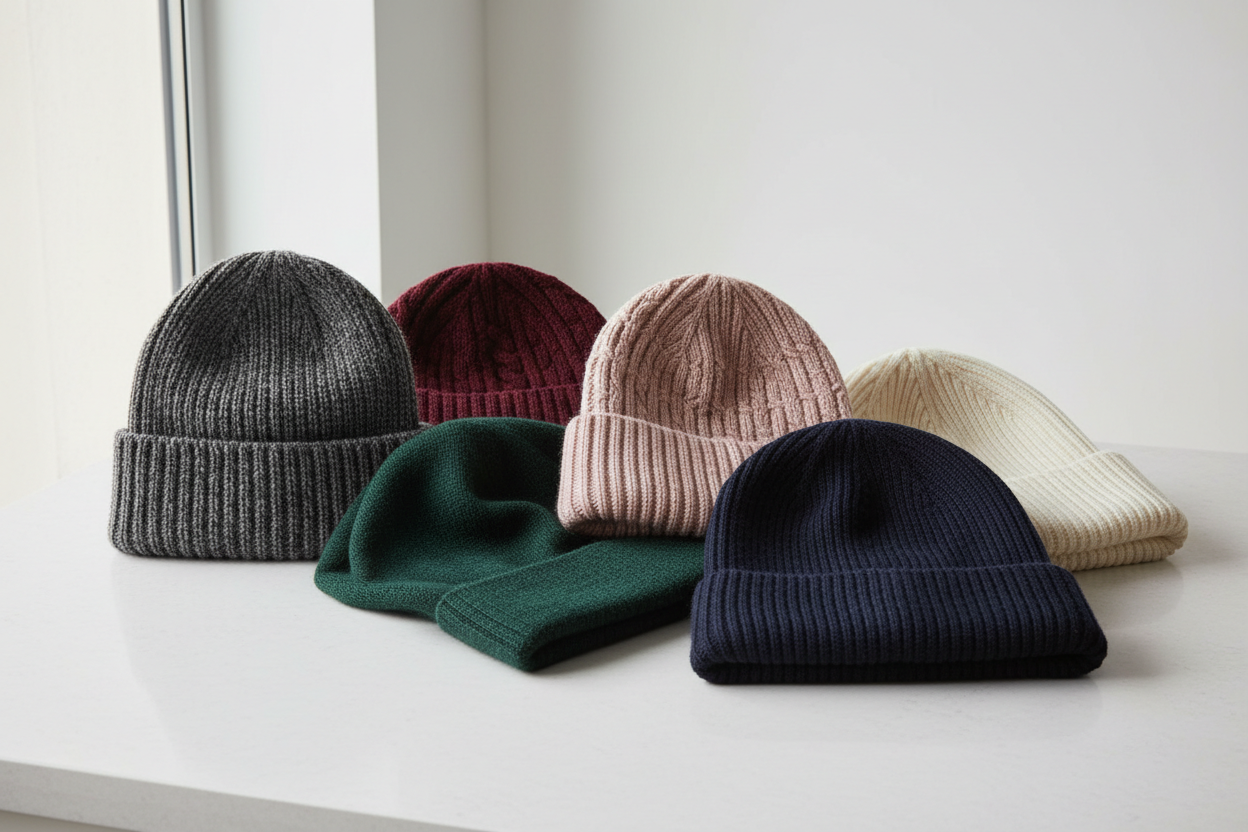
Beanies: a timeless accessory that completes the style (and makes everyday life warmer)
Beanies are not just a necessary accessory for cold days – they are one of the easiest ways to change the vibe of an outfit, highlight your personal style, and add comfort when outdoors. A well-chosen beanie serves as both a practical protection and a clear style element.
This concise guide covers why beanies are so versatile, how to choose the right model and material, and how to style a beanie for both everyday and polished looks.
Why are beanies so popular?
Beanies are popular because they combine three things that many seek in an accessory:
- Warmth and protection: heat escapes through the head, and protecting the ears adds comfort, especially in the wind.
- Easy styling: a beanie is “one accessory, big impact” – it can make an outfit more casual, sporty, or minimalist.
- Seasonal versatility: beanies are not just for winter. A thin knit beanie works in autumn, spring, and cool summer evenings.
Beanies and materials: what’s the real difference?
When choosing a beanie, the material has the most impact on how the beanie feels in use and what weather it suits.
Wool Beanies (e.g. merino wool)
- Pros: warm, breathable, absorbs moisture; merino feels less itchy to many.
- Who it's for: outdoor enthusiasts, commuting, “one beanie for everything” mindset.
Cotton Beanies
- Pros: soft, lightweight, comfortable for many with sensitive skin; good for indoors and transitional seasons.
- Note: cotton generally does not insulate as well when wet as wool, so it’s not the best choice for extreme cold and sleet.
Synthetic Blends and Technical Beanies
- Pros: often durable, quick-drying, and well-fitting; great for sports and active use.
- Who it's for: running, skiing, cycling, layering under a helmet.
Tip: If you’re looking for an “all-weather” beanie, many opt for wool or wool blends. If the beanie is primarily a style element and you also wear it indoors, cotton may be the most comfortable choice.
Fit matters: how to find the best beanies for you
A beanie may look good in a picture but feel wrong on your head. When considering fit, keep these in mind:
- Head circumference and stretch: snug but not tight. A beanie that is too loose will rise and “move” in the wind.
- Length: a shorter “fisherman style” adds edge and highlights facial features; a longer style gives a more relaxed, soft silhouette.
- Turn-up (cuff): a turn-up adds warmth to the forehead and ears and gives a more polished look.
- Seam feel: especially for those with sensitive skin, the inner seams and knit structure can affect comfort surprisingly much.
Beanies as style finishers: 5 easy styling ideas
- Minimalist everyday look: Black or gray beanie + wool coat + straight pants. Result: polished and timeless.
- Casual weekend: Knit beanie + puffer jacket + jeans + sneakers. Works in the city and on the go.
- Sporty layering: Technical beanie + shell jacket + mid-layer. Choose a color that repeats in your shoes or gloves.
- Color pop in a neutral outfit: Beige or black basic outfit + bright beanie (e.g. blue, green, or red). One accessory makes the whole look more interesting.
- Beanie and hair (quick tips):
-
- Ponytail at the nape + beanie = neat and practical
- Hair down + beanie slightly back = relaxed, trendy silhouette
- Scarf + beanie = adds warmth and layers
Care Guide: how to keep beanies in shape and looking good
You can significantly extend the lifespan of a beanie with a few small practices:
- Air out often, wash less frequently (especially wool).
- Follow the washing instructions: wool generally prefers gentle washing and the right detergent.
- Dry flat: hanging stretches the knit and changes its shape.
- Remove pilling as needed: pilling is normal in many knits – a clean surface makes the beanie look new again.
Frequently Asked Questions (FAQ)
Which beanies are best for autumn and spring?
Often the best are thin knit beanies or cotton beanies that breathe and don’t feel too hot in variable weather.
What about winter?
In winter, many choose wool beanies or thicker knits, preferably with a cuff, to keep ears and forehead protected.
How do I choose the color of a beanie?
The easiest rule: choose a beanie that either
- matches the coat (subtle, “premium” feel) or
- contrasts (the beanie is an interesting detail of the outfit).
____